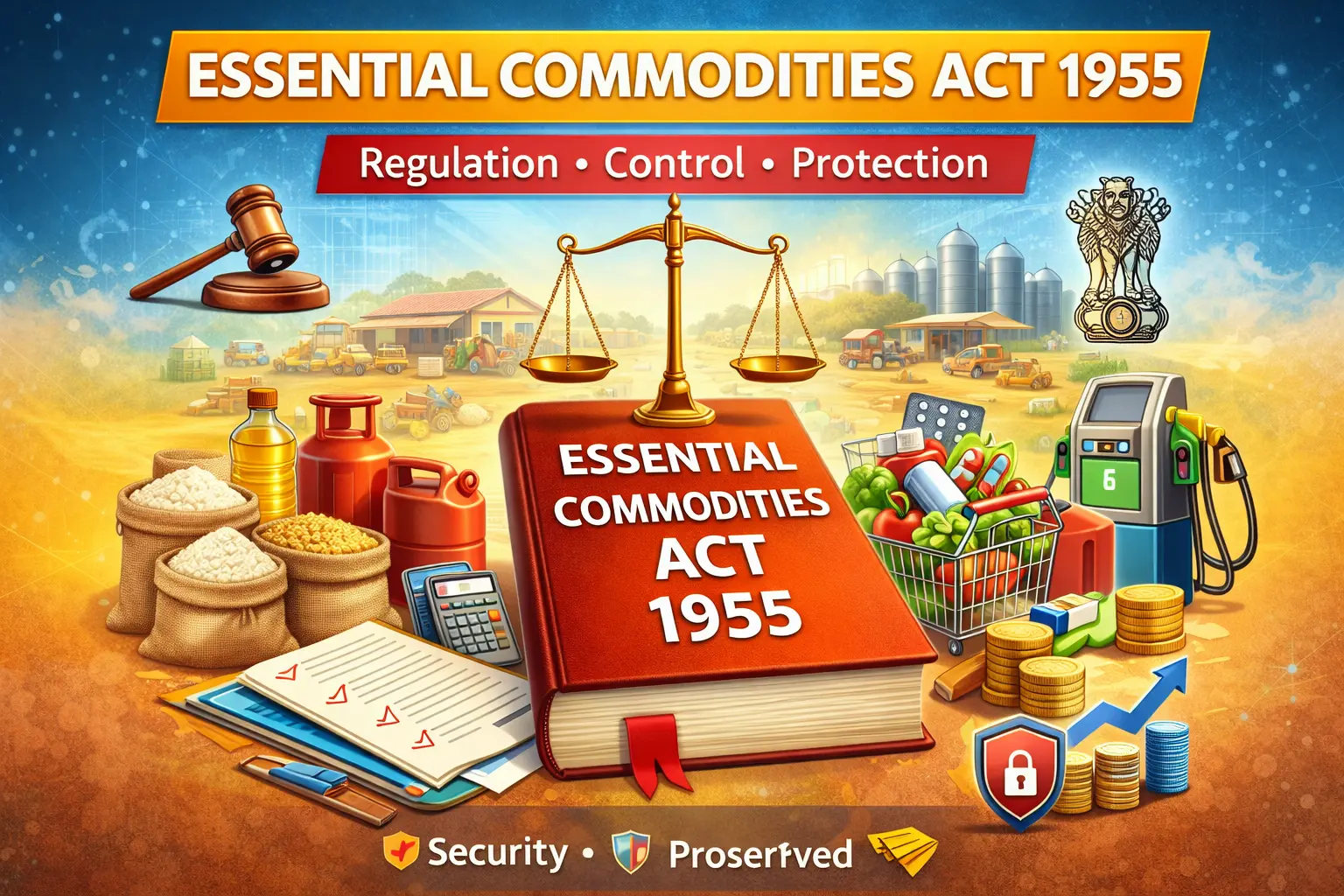
Imagine your LPG cylinder costing 20% more next month, or filling up your car and seeing the meter reach ₹120 per liter. That is not speculative: as the conflict in West Asia narrows the Strait of Hormuz, crude oil prices have risen above $120 per barrel, endangering the cost of fuel, fertilizer, and food in India. This is where the Essential Commodities Act, 1955 (ECA) , a 71-year-old statute, becomes your silent guardian against shortages and profiteering.
What is the 1955 Essential Commodities Act?
The ECA gives the government the authority to regulate necessary goods in times of crisis to ensure a consistent supply and reasonable pricing. Authorities may regulate commerce, production, storage, and distribution under Section 3 if necessary to “maintain or increase supplies, equitable distribution, and reasonable prices.” It was used in the early years of India’s food deficit and focuses on hoarding and black selling, which exacerbate any shortfall.
West Asia War: How India’s Fundamentals Are Affected
India imports $3.7 billion worth of fertilizers, 68.4% of its LNG, and 46.9% of its LPG from West Asia. Some of Conflict Risks include:
- Fuel disruptions: Tankers reroute, increasing the cost of transportation and driving up the price of gasoline and diesel.
- Fertilizer shortages: As farmers’ expenses rise, grains, vegetables, and pulses become more expensive
- Effects: All these are adversely impacting packaging and industrial inputs, affecting everything from groceries to cooking gas.
Oil spikes are not yet a significant inflation concern, according to Finance Minister Nirmala Sitharaman, but a protracted conflict might change that by raising CPI and delaying GDP growth.

How ECA Responds in 2026
The Act permits the government to impose:
- To avoid hoarding, merchants are subject to stock limits.
- For necessities like fertilizers and petroleum goods, there are supply requirements and price limitations.
- Section 6A permits raids and seizures for unlawful storage; Section 7 imposes a maximum sentence of seven years in prison.
The post-2020 modifications, which perfectly fit the current situation, only permit action in “extraordinary circumstances” like war.
# Actual Effect: From Farms to Your Kitchen Table
| Affected Commodity | West Asia Link | ECA Role |
|---|---|---|
| Petroleum & Diesel | 80%+ imports via Gulf | Stock limits, price controls |
| Fertilisers | $3.7B from region | Supply regulation for farmers |
| LPG/Cooking Gas | 46.9% imports | Distribution mandates |
| Foodgrains/Veggies | Higher farm/transport costs | Hoarding |
This table illustrates how ECA connects local stability to global shocks.
The Significance of ECA in a Liberalized Economy
Although some claim it is out of date, ECA is crucial for controlling inflation and ensuring food security during emergencies like the current war or COVID-19. It ensures that no one takes advantage of panic for financial gain by striking a balance between markets and welfare.
Essential Commodities Act FAQs
Ques: What are ECA’s definition of necessary commodities?
Ans: Fuel, fertilizers, medications, and food items are all included in the flexible list, which is determined by government notifications.
Ques: Is it possible for ECA to immediately set fuel prices?
Ans: Yes, through price controls and anti-hoarding measures in the event that the war intensifies and there is a shortage of commodities.
Ques: Has India ever employed ECA for oil?
Ans: Often during Gulf crises; COVID mask/sanitizer controls are contemporary instances.
Ques: What happens if a war rages for months?
Ans: A prolonged outage can cause prices to rise by 1% to 2%, but ECA keeps necessities stable.
Ques: Where can I find official updates?
Ans: Use the India Code portal or the Ministry of Consumer Affairs website to receive notifications.
In 2026, this 1955 law is still in effect as your first line of defense in the event of a worldwide conflict. If this clarified anything, please share!
Discover more from ObjectiveDaily
Subscribe to get the latest posts sent to your email.