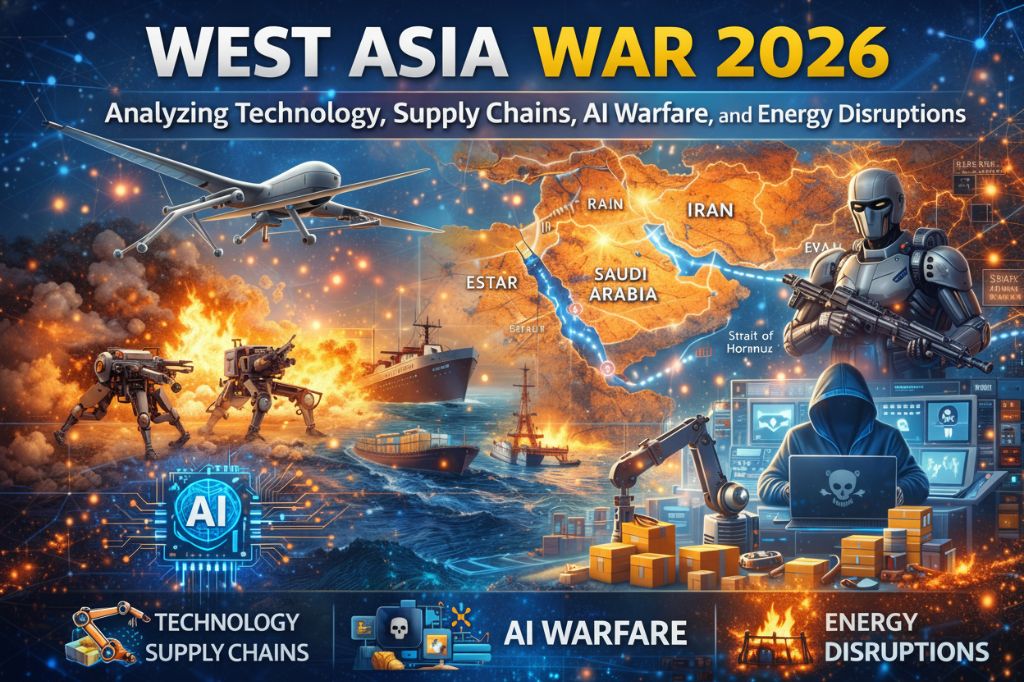

The Ghost in the Machine
Today’s geopolitical landscape resembles a stage, but the most significant confrontations aren’t just about missiles or resources. But a “ghost” has infiltrated the machinery via a concealed battleground where the primary tools are satellite signals, underwater cables, and domestic software. Though physical borders still bristle with tension, the real contest for supremacy centers on information control. This is perhaps most apparent in the growing friction between Iran and the United States. In this digital contest, a nation can be strategically “offline” from the global community while remaining operational within its own territory, fundamentally altering how conflict is waged in the 21st century.
The Rise of the “National Intranet”| How Iran Stays Functioning While Silencing Dissent
When a government seeks to suppress internal unrest, a total internet blackout is often a double-edged sword that can destroy the local economy. Iran has bypassed this issue through a strategic “smart move”: the implementation of a Domestic Internet.
This model closely resembles North Korea’s “Kwangmyong” network which offers a tested framework for complete information dominance. The nation’s territory confines this internal network, unlike the worldwide web. This isolation while remaining entirely cut off from the outside world enables crucial services, including banking, internal messaging, and ride-hailing applications to operate without interruption.
From a strategic perspective, this move goes beyond just silencing opposition. It’s a planned effort to lessen the economic impact of international sanctions.
By moving banking and essential services to an internal intranet, Iran makes its domestic economy “sanction-proof” in the digital realm. This ensures the state can maintain control and economic activity even when global access is severed, keeping the population connected to the state but isolated from the globe.
The Starlink Smuggling Ring | 10,000 Terminals and a “Free Iran” Plan
The Iranian government is trying to tighten its grip, but a different kind of game is playing out, one of satellite cat and mouse. More than 10,000 Starlink terminals have reportedly been smuggled into Iran.
But what’s the goal?
The goal is to equip journalists with the necessary tools to report freely.
Furthermore, the United States has reportedly facilitated the delivery of another 6,000 terminals to ensure that information regarding domestic protests continues to reach the global community.
The military response has been aggressive, utilizing high-level jamming technology that successfully blocks approximately 95% of satellite signals. However, the remaining 5% of connectivity is sufficient for journalists to transmit photos and short video reports.
“Starlink has activated a ‘Free Iran’ plan across the country. If you have a terminal, you simply connect it and point it toward the sky. You can access unlimited internet without a subscription or a valid plan—a move specifically designed to empower journalists and supporters of the movement.”
This analysis highlights the efficacy of decentralized satellite technology in countering centralized jamming efforts. Services like Starlink, which offer internet access without necessitating a paid subscription, are effectively bypassing conventional economic barriers. Consequently, this method creates a direct digital conduit, a pathway that governmental bodies find challenging to fully regulate.
The 30km Vulnerability | The Undersea Cables That Could Crash the Economy
A critical maritime route near Iran and Saudi Arabia serves as one of the world’s most significant digital bottlenecks. Within a narrow 30km stretch, vital undersea cables carry the vast majority of global internet traffic. This geography is not merely a physical constraint but the site of an active territorial dispute, as both Saudi Arabia and Iran claim the area to control the flow of both oil and data.
Iran’s geographical closeness provides it with significant influence. By threatening to disrupt the infrastructure within this disputed 30-kilometer corridor, Iran can exert pressure on the international community. Damaging these cables would not only slow down global communication but could also potentially harm the economies of several countries that depend on these specific data routes.
While many nations are vulnerable to this bottleneck, India has secured a position of regional digital hegemony. Through Tata Communications, India controls and operates the majority of alternative undersea cable routes traveling through Singapore and Africa. This diversification ensures that even if the Iranian route is compromised, Indian connectivity remains secure through infrastructure it largely owns.
The “Kill Switch” Reality | Why National Tech (Like NavIC) is No Longer Optional
The Iran-US conflict highlights a harsh reality of digital sovereignty: relying on foreign-owned technology is a major strategic risk. Technologies like GPS are owned by the United States and governed by complex treaties and contracts. These legal frameworks act as a “soft” kill switch; nations are legally and technically hemmed in by terms of service that prevent them from using the technology against the provider.
In a state of war or diplomatic fallout, the owning nation can simply disable the technology for its adversaries. This is why the development of India’s NavIC (Navigation with Indian Constellation) is a geopolitical necessity. Using foreign systems during a conflict means your hardware could be disabled by a remote button-press if your interests diverge from the provider’s.
The strategic lesson is clear: big nations can and will disable the very technology they sell if interests clash. Sovereign defense requires independent systems to ensure national infrastructure remains functional when international treaties are rendered void by conflict.
Guerrilla Connectivity | Tor and the Power of Bluetooth Mesh Networks
When traditional infrastructure is censored, the battlefield shifts to “last resort” technologies. These tools represent a form of digital guerrilla warfare where the “Citizen-vs-State” dynamic is most visible:
- Tor: Essential for navigating state censorship and accessing the global web anonymously.
- Bluetooth Mesh Networks: It enables devices to link up directly, sidestepping the need for a central service through a localized web of device-to-device connections, users can exchange messages and files, even in active conflict zones.
The widespread use of Bluetooth technology in consumer devices, which is often seen as a basic feature, has become a crucial tool for survival. These mesh networks turn every smartphone into a part of a decentralized resistance system. While governments focus on advanced satellite technology, these simple “guerrilla” networks allow people to maintain a basic level of communication that is difficult for any central authority to completely control.
The Future of Sovereign Networks
The conflict between Iran and the U.S. signals a permanent shift toward a “dual-stack reality.” Nations are realizing they need both; the access to the global internet and a robust, sovereign domestic backup. We are moving away from a single, unified web toward a world of “splinternets” where digital infrastructure is guarded as fiercely as physical borders.
As we move forward, every sovereign nation must face a fundamental question: Can a country ever truly be independent if its digital heartbeat is owned and controlled by someone else?
Discover more from ObjectiveDaily
Subscribe to get the latest posts sent to your email.